How Much Does an Engagement Ring Cost?
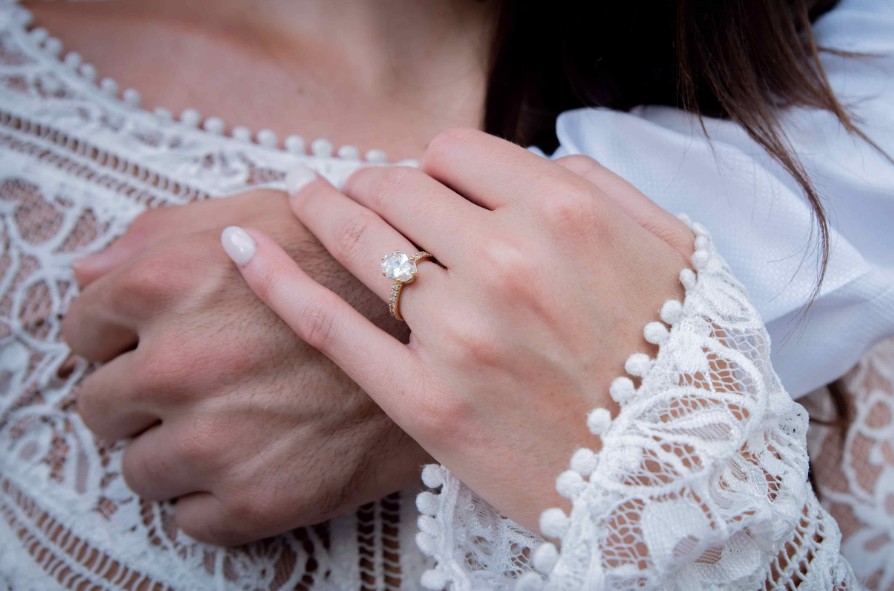
The good news? You don’t need to spend a fortune to find a beautiful engagement ring. The best choice is one that fits your budget and your partner’s style without creating unnecessary financial stress.
Average Engagement Ring Cost in 2026
For context, BriteCo’s 2025 market data reported a median engagement ring sales price of $6,939, with natural diamond rings having a median price of $12,961 and lab-grown diamond rings $4,557. These figures reflect its particular sales and appraisal data, so your actual price may be much lower or higher.
Here is a practical guide to common budget ranges in the US.
| Budget | What you might consider |
|---|---|
| Under $500 | Simple gemstone rings, sterling silver, or smaller lab-grown stones |
| $500–$1,000 | Moissanite, petite diamond rings, or simple gold settings |
| $1,000–$2,500 | Many lab-grown diamond rings and selected natural diamond designs |
| $2,500–$5,000 | Higher-quality lab-grown rings or smaller natural diamond rings |
| $5,000–$10,000 | More natural diamond options, premium settings, and larger stones |
| $10,000+ | Larger or higher-grade natural diamonds, platinum, and luxury designs |
These are illustrative shopping budgets, not guaranteed prices. Stone specifications, metal prices, retailer markups, and local taxes affect the final cost.
What Affects the Price of an Engagement Ring?
1. Natural vs. Lab-Grown Diamonds
The type of diamond you choose can make a significant difference in price.
-
Natural diamonds form naturally in the Earth over geological timescales. Their rarity and market demand influence their price.
-
Lab-grown diamonds are created using technology that reproduces the conditions needed for diamond growth. They have essentially the same chemical composition and crystal structure as natural diamonds, but typically cost considerably less.
-
Moissanite is a different gemstone that offers impressive sparkle and is often more affordable than either type of diamond.
For buyers who want a larger diamond within a limited budget, lab-grown diamonds are worth comparing. If natural origin is particularly important to you, a smaller natural diamond may be a better fit.
2. Diamond Size and Carat Weight
Carat measures a diamond’s weight, not its physical dimensions. Larger diamonds generally cost more, and prices do not increase in a perfectly linear way.
A well-cut diamond with a slightly lower carat weight can look beautiful without stretching your budget. Oval, pear, and marquise shapes can also appear larger face-up than a round diamond of the same weight, depending on their proportions.
3. The Four Cs
When choosing a diamond, compare its four main grading characteristics:
-
Cut: Influences how well the diamond reflects light. Prioritize cut quality for sparkle.
-
Color: Measures how colorless a white diamond appears. Slightly warmer grades can offer savings.
-
Clarity: Describes internal and external characteristics. Some inclusions are not visible without magnification.
-
Carat: Measures the diamond’s weight.
You do not necessarily need the highest grade in every category. A balanced combination can give you a beautiful ring while leaving more money for other wedding expenses.
4. Ring Metal and Setting
The band and setting contribute to the final price, too.
-
14K gold: A popular option for balancing durability and gold content.
-
18K gold: Contains more pure gold and has a richer gold content, but is generally softer than 14K gold.
-
Platinum: A premium, naturally white metal that is dense and corrosion-resistant.
-
Sterling silver: An affordable choice, although it is less common for traditional engagement rings intended for lifelong daily wear.
A simple solitaire setting usually costs less than an elaborate halo or pavé setting with many additional stones.
How Much Should You Spend on an Engagement Ring?
You may have heard the traditional suggestion to spend two or three months’ salary on an engagement ring. Treat that as a cultural or marketing guideline, not a financial rule you must follow.
A sensible budget depends on your income, savings, debts, upcoming wedding costs, and other financial goals. There is no minimum amount you need to spend to demonstrate your commitment.
A good approach is to decide on a comfortable spending limit before visiting jewelry stores. Choose a ring that feels meaningful without relying on debt you cannot comfortably repay.
How to Save Money When Buying an Engagement Ring

Choose a simple setting
A classic solitaire uses a single center stone and a relatively uncomplicated design. It can look elegant and timeless without the additional cost of multiple accent diamonds.

Compare lab-grown diamonds
If you want a diamond with a larger appearance for less money, compare lab-grown options with natural diamonds of similar specifications. Make sure the stone’s origin is clearly disclosed.

Explore alternative gemstones
Moissanite and sapphires can make beautiful engagement rings. They offer different appearances and price points, so compare durability, maintenance, and the style your partner prefers.

Compare several jewelers
Review the total price, stone grading report, metal specifications, resizing policy, warranty, and return conditions. Do not compare rings based on carat weight alone.
Frequently Asked Questions
Is $1,000 Enough for an Engagement Ring?
Yes. A $1,000 budget can provide several options, including moissanite rings, smaller natural diamond rings, and many lab-grown diamond designs. The available choices depend on the stone specifications and setting you select.
Is a $5,000 Engagement Ring Too Expensive?
Not necessarily. It depends on your financial situation and priorities. If spending $5,000 would interfere with rent, emergency savings, debt repayment, or other important expenses, choosing a less expensive ring may be wiser.
Is a Lab-Grown Diamond a Real Diamond?
Yes. Lab-grown diamonds have essentially the same chemical composition and crystal structure as natural diamonds. Their origin is different, so sellers should clearly identify them as lab-grown rather than natural.
Does an Engagement Ring Have to Include a Diamond?
No. Sapphires, moissanite, other gemstones, and simple metal rings can all be meaningful engagement ring choices. The right design depends on your partner’s preferences and your budget.
Should I Buy the Ring Online or In Person?
Both options can work. In-person shopping lets you inspect and try on rings, while online stores may offer a wider selection. Check the seller’s reputation, return policy, sizing options, and documentation before purchasing.
Final Thoughts
So, how much does an engagement ring cost? In the US, it can be anywhere from a few hundred dollars to well over $10,000, depending on your choices. Recent market data offers useful benchmarks, but there is no single price that every couple should aim for.
My practical advice is to start with a budget you can comfortably afford, compare natural and lab-grown diamonds if you want a diamond, and focus on a setting and style your partner will enjoy wearing.
The best engagement ring isn’t the most expensive one. It’s the one that celebrates your relationship without putting unnecessary financial pressure on your future together.